
Microscopic Life in the Maara
Biochar is a fine-grained, stable, carbon-rich charcoal substance made through pyrolysis. Organic materials like wood chips or forestry slash are heated between 350°C and 700°C in a process that limits or completely excludes oxygen.
We have found we can make biochar in an old bathtub! With the flame looping and not pulling in oxygen, the material breaks down into combustible gases and solid carbon instead of simply burning to ash.
Why Biochar?
Biochar is good for carbon sequestration because it locks carbon safely into a stable form for hundreds to thousands of years, helping to mitigate climate change.
It also improves soil structure, acting like a microscopic sponge that retains water and vital nutrients. Its porous structure creates a protected microbial habitat for beneficial soil microorganisms and can help lower fertiliser needs by preventing nutrients from leaching away.
Para Kore Forestry Slash Solution… good ideas applied
Tairawhiti residents know that forestry slash — the residue left behind after harvesting — can become a major environmental hazard, causing land damage and blocking rivers during severe weather events.
Converting forestry slash into biochar aligns beautifully with Para Kore (zero waste) and Hua Parakore (Māori organic) principles.
It offers waste elimination, diverting hazardous wood waste from vulnerable hillsides and waterways. It creates a closed-loop system, transforming what can be a destructive liability into a high-value soil amendment. And it supports whenua restoration, returning carbon to the soil to help heal degraded forestry land or improve soil in regional maara kai.
Charging the Sponge: Inoculants & “Brewing”
A trick I learned from Cory Hope during our “Soil Sovereignty” day with him and Jessica Hutchings is that raw biochar is an empty matrix.
If added directly to the soil, it can act like a dry sponge, temporarily sucking up existing nutrients and water away from plants. “Brewing” or inoculating the biochar fills those pores with nutrients and beneficial microbes before it is applied to the soil.
Lactic Acid Bacteria (LAB) Inoculant
‘LAB’ is a liquid probiotic preparation used in natural farming to boost soil health and suppress pathogens.
The culture is captured from the environment via rice wash water and then brewed — I use blackstrap molasses as a food source.
LAB acts as a kind of biological shield, or “garden law enforcement”, by outcompeting harmful, disease-causing bacteria and fungi. It can suppress disease by curbing anaerobic pathogens and help control issues like powdery mildew. It also helps unlock bound soil nutrients, such as phosphate, and accelerates compost breakdown.
Odour elimination is one of my key aims in the Māoriland compost space, and my hope is that LAB, together with biochar, will help neutralise ammonia and break down organic waste rapidly.
Winter in the Maara
Winter has been a time of extending and organising our maara kai, using our compost to improve the soil and reactivating our community composting. We have also been partnering with Organic Wealth to produce more compost so we can continue improving our food production.
We are working hard in the maara to produce more food.
Our community has real food need, and helping to provide good, nutritious, fresh, wairua-nourishing kai is important at a time when people simply can’t afford to buy everything they need.
The Living Soil Food Web
To build true soil fertility, the inputs need to feed a diverse, microscopic ecosystem.
Browns, Greens and Microbes
Following soil biology frameworks like those highlighted by practitioners such as Cory Hope, soil life requires a balanced diet of “Browns & Greens.”
Carbon-rich materials — the browns — and nitrogen-rich materials — the greens — sustain the soil system. Compost is essentially fungi and bacteria food. Different organic materials feed different parts of that ecosystem: woody, complex carbons support fungi, while simple sugars and green proteins support bacteria.
Healthy compost will contain wonderful microscopic life such as omnivorous nematodes. These microscopic worms eat bacteria, fungi and other nematodes, unlocking and excreting plant-available nutrients in the process.
I am pictured here admiring my compost’s pulsing, moving microscopic life!
I feel like I have a whole new bunch of pets now that I have seen them! I am endeavouring to feed them the right combination of fungi and bacteria foods to keep them lively — and our soil nutrient dense.
Indigenous Soil Sovereignty
As emphasised by researchers and Hua Parakore farmers such as Jessica Hutchings, restoring soil health is deeply connected to Indigenous environmental knowledge.
Using biochar, compost and natural inoculants uplifts the wellbeing of both people and land — tangata and whenua — and helps foster true food sovereignty through organic, closed-loop farming.
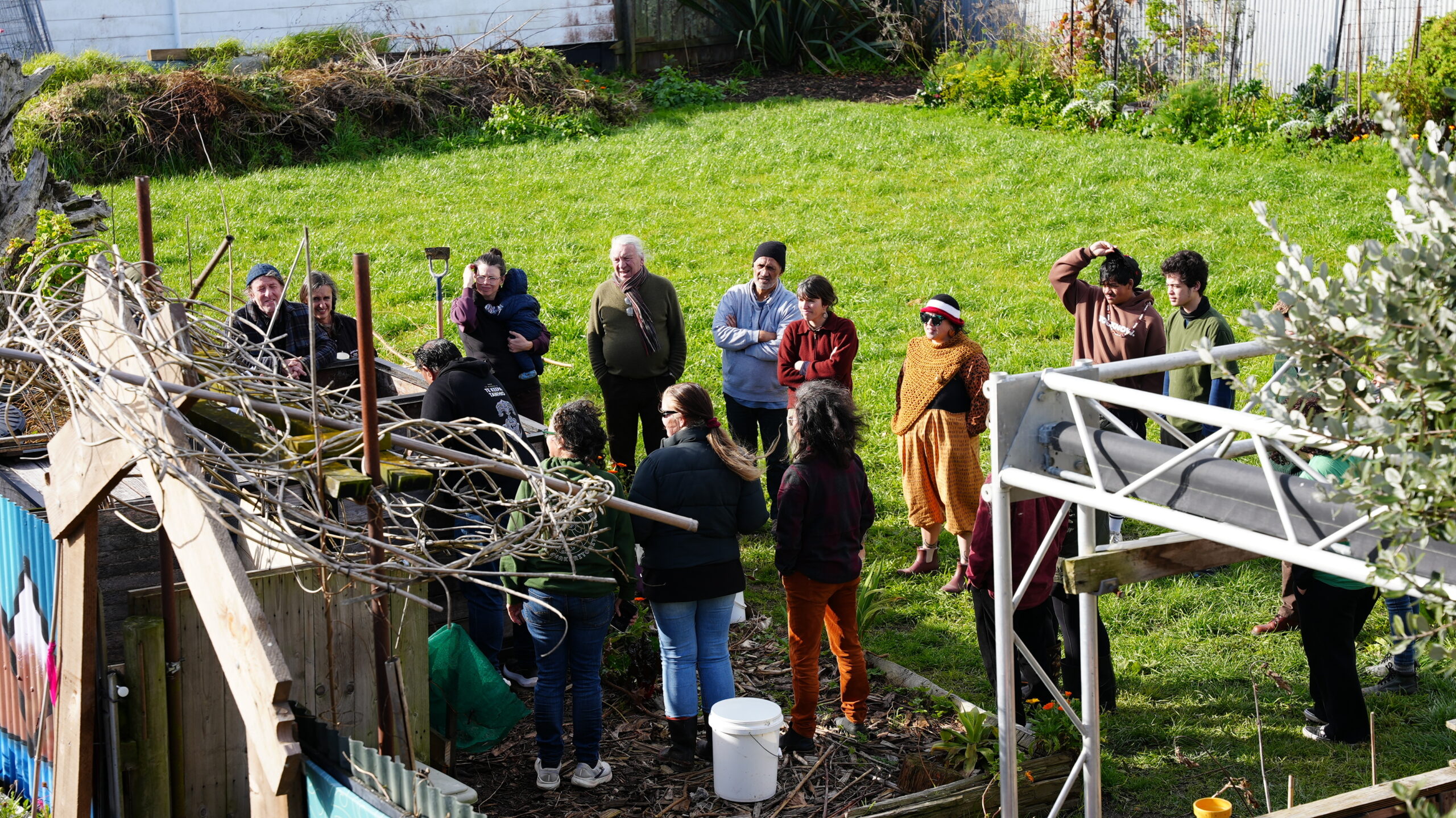
Wonderful Jessica Hutchings teaching us a thing or two!
Check her trust out:
https://jessicahutchings.org/papawhakaritorito-charitable-trust/